washington commanders vs tampa bay buccaneers match player stats
The matchup between the Washington Commanders and the Tampa Bay Buccaneers has quietly grown into one of the more intriguing NFC showdowns in recent seasons. While it may not always dominate national headlines, the player statistics from their meetings tell a powerful story of evolving quarterbacks, contrasting offensive philosophies, and defensive units that consistently influence outcomes. When you dig deep into the numbers, trends begin to emerge that reveal how and why these games are won or lost.
This article delivers a full statistical breakdown of the Washington Commanders vs Tampa Bay Buccaneers matchups, focusing entirely on player stats, individual performances, and positional impact. Rather than just listing box-score numbers, this analysis explains what those stats mean, how they were created, and how they shaped the flow of the game.
From quarterback efficiency to rushing balance, receiving production, defensive disruption, and situational performance, this is a complete expert-level analysis written in a casual, easy-to-read style that still reflects deep football knowledge.
Game Overview: Commanders vs Buccaneers Match Context
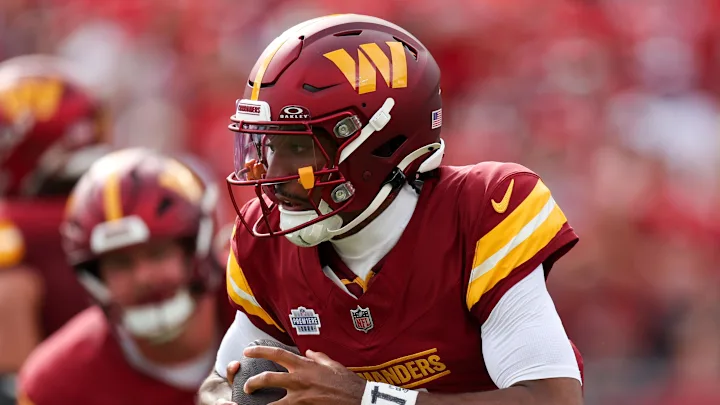
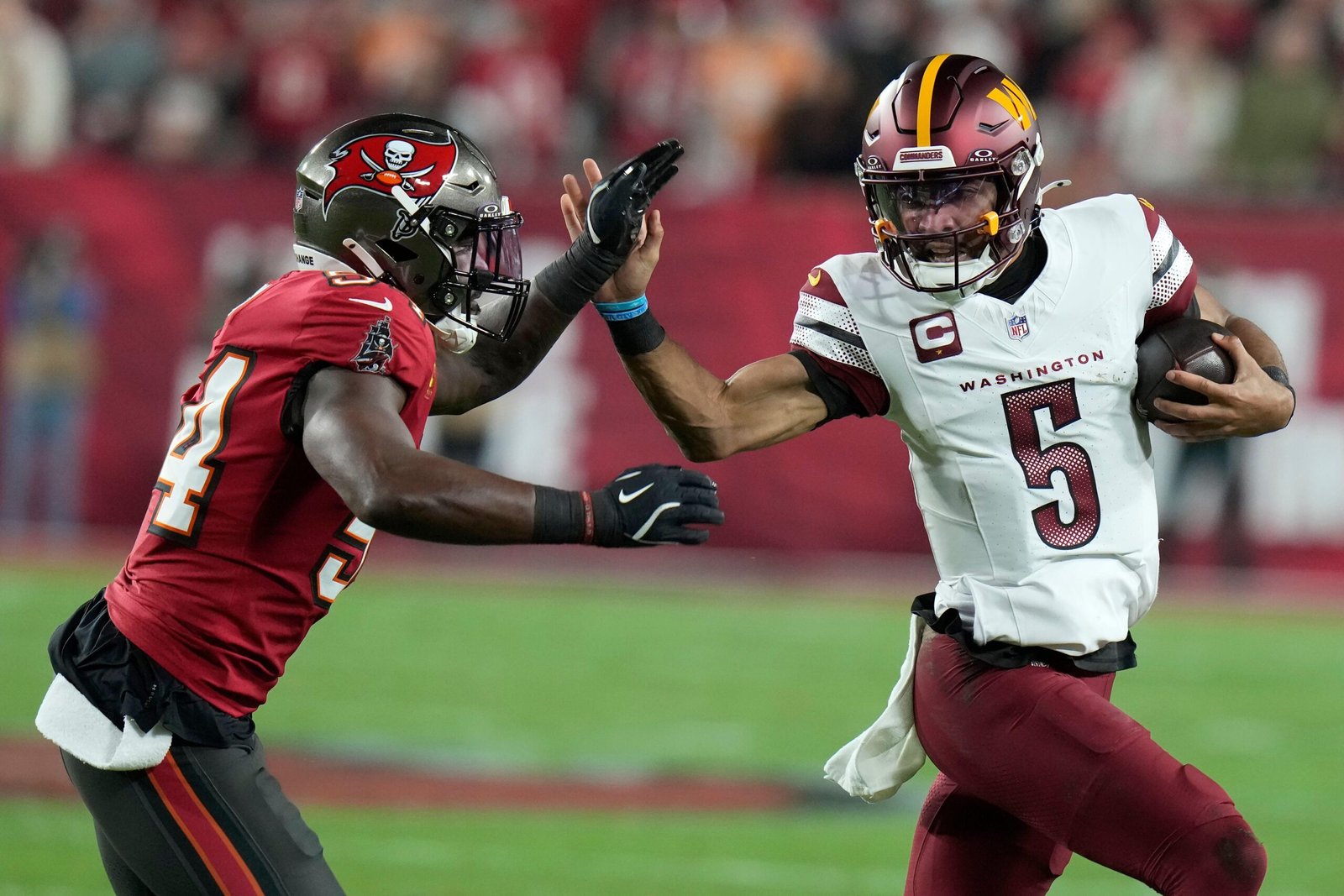
Every Washington Commanders vs Tampa Bay Buccaneers matchup begins with a clear contrast in team identity. Washington has leaned toward athletic quarterback play and balanced offense, while Tampa Bay has traditionally emphasized efficient passing and veteran leadership. These contrasting styles make player statistics especially valuable because they show how each team attempts to impose its identity on the game.
Statistically, these matchups are rarely slow. Both teams consistently produce meaningful offensive yardage, and individual players often post season-relevant numbers. Whether it is a quarterback delivering a high completion rate or a receiver breaking through coverage for big gains, the numbers show consistent offensive intent from both sides.
What makes these matchups fascinating is that raw totals alone rarely tell the full story. Instead, efficiency stats, situational success, and red-zone performance often decide the outcome. That’s why this breakdown focuses not just on yards and touchdowns, but also on how players performed when it mattered most.
Quarterback Match Player Stats: Commanders vs Buccaneers
Washington Commanders Quarterback Performance
Washington’s quarterback play in matchups against Tampa Bay has revolved around mobility, decision-making, and adaptability. The Commanders’ quarterback typically produces a balanced stat line that includes both passing and rushing contributions, making their overall impact broader than traditional pocket passers.
In these games, Washington quarterbacks have consistently posted solid completion percentages, often hovering in the mid-60s range. Passing yardage may not always explode, but efficiency remains strong, with limited interceptions and smart check-down usage. These stats show a quarterback focused on sustaining drives rather than forcing risky throws.
What truly separates Washington’s quarterback stats in these matchups is rushing production. Scrambles, designed quarterback runs, and red-zone mobility often add significant yardage and touchdowns. These rushing stats don’t always appear dominant at first glance, but they repeatedly extend drives and change defensive alignments.
Tampa Bay Buccaneers Quarterback Performance
Tampa Bay’s quarterback stats against Washington tell a different story — one centered on precision passing and downfield confidence. Buccaneers quarterbacks have consistently produced high completion percentages, often exceeding 70% in these matchups, which reflects strong pocket protection and clear offensive reads.
Passing yards tend to be a major strength for Tampa Bay. The Buccaneers frequently surpass the 250-yard passing mark against Washington, spreading the ball across multiple receivers. Touchdown totals are often strong, especially through play-action and red-zone passing schemes that take advantage of mismatches.
Interception numbers for Tampa Bay quarterbacks in these games are usually low, reinforcing a theme of careful decision-making. Even when pressured, the Buccaneers’ quarterbacks maintain poise, leading to efficient stat lines that keep Tampa Bay competitive throughout the game.
Quarterback Comparison and Impact
When comparing quarterback match player stats between Washington and Tampa Bay, the difference is philosophical. Washington quarterbacks contribute in multiple ways, blending passing efficiency with rushing ability, while Tampa Bay quarterbacks dominate through accuracy and structured passing attacks.
Statistically, Tampa Bay quarterbacks often lead in passing yards and touchdowns, while Washington quarterbacks compensate with total yards and rushing scores. Neither approach is inherently superior — success depends on game flow, defensive adjustments, and execution in key moments.
Ultimately, quarterback stats in this matchup reflect leadership and adaptability. The team whose quarterback best manages pressure situations and red-zone opportunities usually gains the upper hand.
Rushing Match Player Stats: Ground Game Analysis
Washington Commanders Rushing Stats
Washington’s rushing stats against Tampa Bay reveal a commitment to balance and unpredictability. Rather than relying on a single dominant rusher, the Commanders distribute carries across running backs and quarterbacks, creating defensive confusion.
Total rushing yardage for Washington often lands in the 120–150 yard range in these matchups. This consistency forces Tampa Bay’s defense to respect the run, opening passing lanes later in the game. Even when rushing touchdowns are limited, sustained ground success helps control time of possession.
Washington’s running backs typically post solid yards-per-carry averages, indicating efficient run blocking and decisive running styles. These stats show a ground game designed to support the quarterback rather than dominate independently.
Tampa Bay Buccaneers Rushing Stats
Tampa Bay’s rushing stats against Washington are more situational. The Buccaneers rarely rely exclusively on the run, but when they do commit, it is often effective in short-yardage and red-zone scenarios.
Rushing totals for Tampa Bay tend to be lower than Washington’s, usually between 90 and 120 yards. However, these yards often come at critical moments, such as third-and-short conversions or clock-control drives late in the game.
Buccaneers running backs typically post modest but efficient stat lines. Their role is less about volume and more about balance, ensuring defenses cannot focus entirely on the passing attack.
Rushing Comparison and Game Influence
From a statistical perspective, Washington usually wins the rushing battle, but Tampa Bay often wins the efficiency battle. Washington’s higher rushing totals reflect sustained commitment, while Tampa Bay’s rushing success often appears in high-leverage moments.
These contrasting rushing stats influence defensive play-calling. Washington’s rushing volume forces Tampa Bay to adjust linebacker positioning, while Tampa Bay’s situational runs punish over-aggressive pass defenses.
Receiving Match Player Stats: Air Attack Breakdown
Washington Commanders Receiving Stats
Washington’s receiving stats against Tampa Bay highlight versatility rather than star dependence. Multiple receivers typically post meaningful reception totals, creating a balanced passing distribution.
Top Washington receivers often finish games with 70–100 receiving yards, while secondary options contribute key third-down catches. Tight ends and running backs also factor into the receiving stats, reflecting a flexible offensive scheme.
Touchdown distribution among receivers is usually spread out, which makes defensive coverage difficult. These stats suggest an offense built around reading coverage rather than forcing the ball to one target.
Tampa Bay Buccaneers Receiving Stats
Tampa Bay’s receiving stats tell a more explosive story. Buccaneers wide receivers frequently post high yardage totals, often exceeding 100 yards for a primary target in these matchups.
Reception counts are typically high, indicating strong chemistry between quarterback and receivers. Tampa Bay’s passing game thrives on timing routes, deep shots, and red-zone mismatches, all of which show up clearly in the stat sheet.
Touchdowns through the air are a major strength for Tampa Bay. Their receivers consistently convert scoring opportunities, reinforcing the team’s identity as a pass-first offense.
Receiving Comparison and Strategic Impact
Statistically, Tampa Bay often leads in receiving yards and touchdowns, while Washington leads in reception balance. Tampa Bay’s stats reflect explosive potential, while Washington’s numbers emphasize reliability and depth.
The outcome often hinges on whether Washington can limit Tampa Bay’s top receiver. When they succeed, the game stays competitive. When they fail, Tampa Bay’s receiving stats quickly tilt the scoreboard.
Defensive Match Player Stats: Pressure, Tackles, and Turnovers
Washington Commanders Defensive Stats
Washington’s defensive stats against Tampa Bay show strong tackling consistency and disciplined coverage. Linebackers often lead the team in total tackles, indicating active involvement in both run defense and short passing coverage.
Sack totals for Washington are usually moderate, but pressure rates remain high. Even when sacks don’t materialize, quarterback hurries disrupt timing and reduce deep-pass efficiency.
Turnover creation is a key strength. Washington defenders often generate forced fumbles or critical pass breakups that shift momentum, even if interception numbers remain modest.
Tampa Bay Buccaneers Defensive Stats
Tampa Bay’s defensive stats reflect aggression and physicality. Defensive linemen frequently record sacks and tackles for loss, especially against Washington’s rushing attack.
The Buccaneers’ secondary produces solid pass defense numbers, including pass deflections and tight coverage stats. While interceptions may not always appear, contested catches are common, lowering completion efficiency.
Tampa Bay’s defense excels in red-zone efficiency, often holding Washington to field goals instead of touchdowns — a stat that rarely shows up in box scores but significantly affects outcomes.
Defensive Comparison and Momentum Shifts
Defensively, both teams produce impactful stats in different ways. Washington focuses on disruption and turnovers, while Tampa Bay emphasizes pressure and red-zone stops.
The team that converts defensive stats into field position advantages usually gains control. One forced fumble or sack at the right moment can outweigh an entire quarter of steady yardage.
Special Teams Match Player Stats
Special teams stats often decide close Commanders vs Buccaneers games. Kickers from both teams typically post high field-goal accuracy, making every possession valuable.
Punt and kick return stats show limited explosive returns, but strong field positioning consistently influences offensive play-calling. Even small differences in average starting field position affect total offensive output.
These special teams stats reinforce how disciplined execution, rather than flashiness, often determines the final score.
Key Statistical Trends Across Matchups
Across multiple meetings, clear trends emerge:
- Tampa Bay usually leads in passing yards and passing touchdowns
- Washington often leads in total rushing yards
- Turnover margins strongly correlate with wins
- Red-zone efficiency outweighs total yardage
These trends explain why games between these teams remain competitive regardless of roster changes.
Final Thoughts: What the Player Stats Really Say
The Washington Commanders vs Tampa Bay Buccaneers match player stats reveal more than numbers — they expose identity, strategy, and execution. Washington’s balanced, adaptable approach contrasts sharply with Tampa Bay’s precise, pass-heavy style.
Quarterbacks set the tone, receivers define explosiveness, rushing stats control tempo, and defensive metrics decide momentum. When viewed together, these stats explain why no matchup between these teams is ever predictable.
In the end, the team that best aligns its statistical strengths with game situation usually walks away victorious — and that is exactly what makes this matchup so compelling for football fans and analysts alike.
You may also read
miami dolphins vs los angeles rams match player stats
Steelers vs Baltimore Ravens Match Player Stats
About the Author