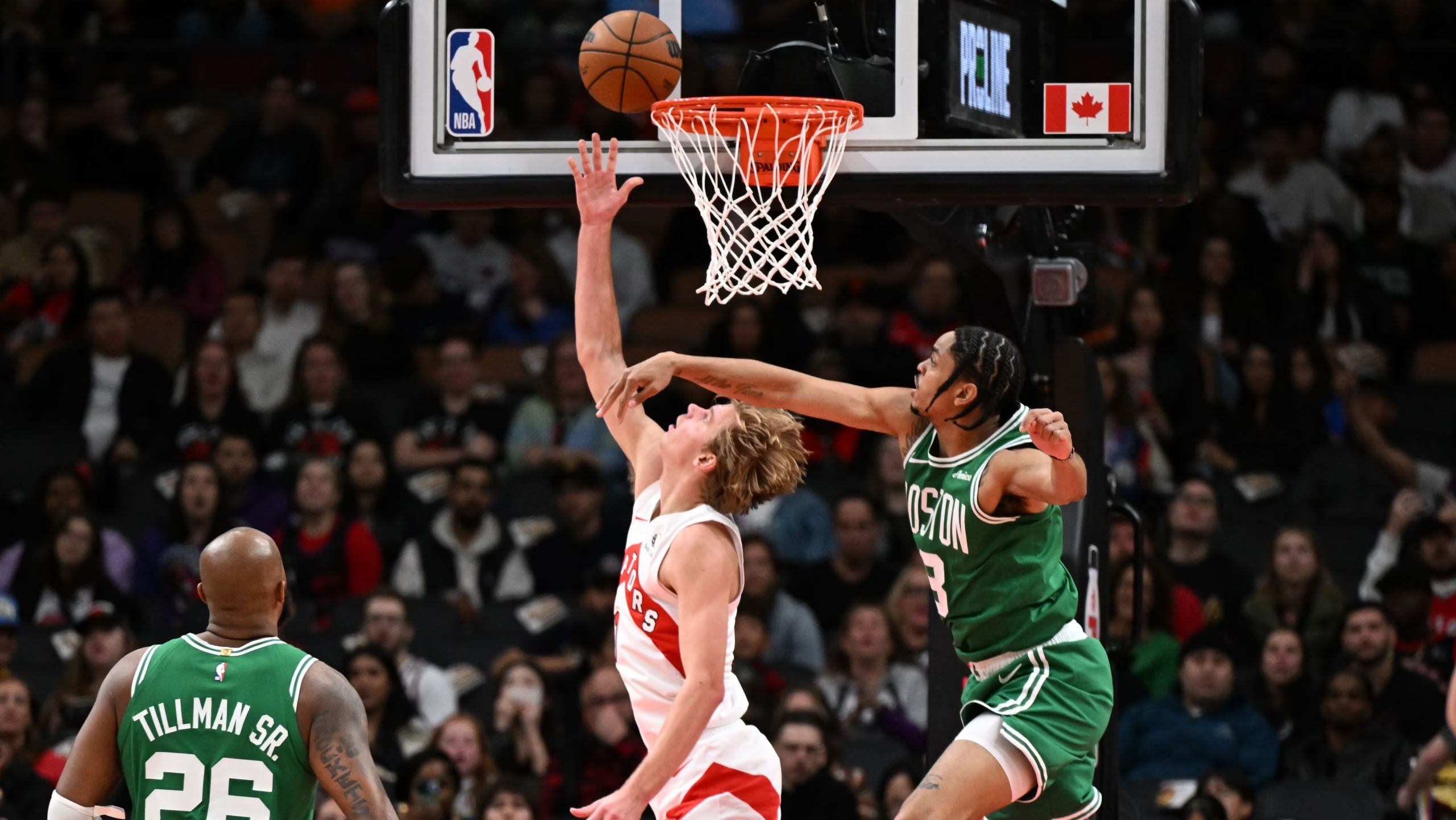
toronto raptors vs boston celtics match player stats
The Toronto Raptors vs Boston Celtics matchup has always been one of the most intriguing battles in the NBA. Every time these two Eastern Conference teams share the court, fans expect intensity, smart basketball, and standout individual performances. This article delivers a deep, expert-level breakdown of the Toronto Raptors vs Boston Celtics match player stats, focusing on how each player influenced the game beyond just numbers.
Rather than simply listing box score data, this analysis explains why the stats mattered, how players impacted momentum, and what the performances reveal about both teams moving forward. Whether you’re a casual fan or someone who studies basketball closely, this article gives you the full picture.
Match Overview: Setting the Tone for Toronto Raptors vs Boston Celtics
The game between the Toronto Raptors and the Boston Celtics opened with a clear playoff-like atmosphere. From the first possession, both teams showed disciplined defense, quick ball movement, and a willingness to test each other physically. The Raptors came in focused on pace control, while the Celtics aimed to stretch the floor early with perimeter shooting.
What made this matchup especially compelling was the contrast in styles. Toronto relied heavily on versatility, switching defenses, and aggressive transition play. Boston, on the other hand, leaned on spacing, half-court execution, and star-driven offense. This contrast set the stage for individual player stats to become extremely meaningful rather than just surface-level numbers.
As the game progressed, the scoreboard stayed close, but the player stats told a deeper story. Every rebound, assist, and defensive stop had weight. The Raptors tried to disrupt Boston’s rhythm, while the Celtics trusted their core players to deliver under pressure. This balance is exactly what made the Toronto Raptors vs Boston Celtics match player stats so fascinating to analyze.
Toronto Raptors Offensive Player Stats Breakdown
The Toronto Raptors’ offensive approach was built on movement, unselfish play, and attacking mismatches. Rather than relying on one player to dominate scoring, Toronto spread responsibilities across multiple contributors. This was evident in the way points, assists, and shot attempts were distributed.
Toronto’s lead scorers didn’t just put up points; they created opportunities for teammates. The Raptors emphasized dribble penetration to collapse Boston’s defense, leading to kick-out passes and high-percentage shots. Player stats reflected this philosophy, with solid assist numbers and efficient shooting from several rotation players.
Another important aspect of Toronto’s offensive stats was shot selection. While three-point shooting played a role, the Raptors didn’t force attempts from deep. Instead, they balanced perimeter shots with strong drives to the rim. This resulted in respectable field goal percentages and kept Boston’s defense guessing throughout the game.
Key Raptors Scorers and Shot Efficiency
Toronto’s primary scoring options showed poise and patience. Their top scorers didn’t rush shots, even when the Celtics applied pressure. Instead, they waited for defensive breakdowns, which translated into efficient scoring nights.
One standout element in the Raptors’ player stats was mid-range efficiency. While many teams avoid this area, Toronto used it strategically. Their guards and wings pulled up confidently when Boston defenders went under screens or closed out too aggressively. These mid-range conversions helped stabilize the offense during cold shooting stretches.
Free-throw attempts also played a role in Toronto’s scoring efficiency. Raptors players attacked the paint with purpose, forcing fouls and earning trips to the line. These easy points boosted individual stat lines and helped Toronto maintain offensive momentum during tight stretches of the game.
Raptors Playmaking and Assist Distributiontoronto raptors vs boston celtics match player statsRaptors Playmaking and Assist Distribution
When analyzing the Toronto Raptors vs Boston Celtics match player stats, the Raptors’ assist numbers stand out. Ball movement was consistent, and very few possessions ended with forced shots. Toronto’s guards did an excellent job reading Boston’s defensive rotations.
Secondary playmakers were especially valuable. Players who might not normally lead the team in assists stepped up, finding cutters and open shooters. This kept Boston from keying in on a single playmaker and made Toronto’s offense unpredictable.
The assist-to-turnover ratio for Toronto reflected disciplined basketball. While the Celtics pressured passing lanes, Toronto stayed composed, resulting in clean offensive sets. This efficiency in playmaking was a major reason the Raptors remained competitive throughout the matchup.
Boston Celtics Offensive Player Stats Analysis
The Boston Celtics entered the game with a clear offensive identity: spacing, ball movement, and star efficiency. Their player stats reflect a team comfortable operating in both transition and half-court settings.
Boston’s offensive leaders took responsibility early, setting the tone with confident shot-making. Rather than overpassing, the Celtics trusted their best players to attack favorable matchups. This trust showed in shot attempts and scoring distribution among the starting lineup.
What stood out most was Boston’s ability to score without sacrificing efficiency. Their top scorers maintained strong shooting percentages, even against Toronto’s physical defense. This balance between volume and efficiency is a hallmark of a well-coached offense, and the Celtics’ player stats highlighted it clearly.
Celtics Star Performers and Scoring Impact
Boston’s leading scorers delivered performances that went beyond raw point totals. Their ability to score at critical moments shifted momentum and forced Toronto to adjust defensively.
Isolation scoring was particularly effective for Boston. When the shot clock wound down, Celtics stars created their own offense with confidence. These possessions didn’t always result in assists, but they produced reliable points, which is reflected in individual scoring stats.
Another notable factor was off-ball scoring. Boston’s wings moved intelligently without the ball, cutting into open spaces and capitalizing on defensive lapses. These easy baskets boosted efficiency numbers and kept pressure on Toronto’s defense throughout the game.
Celtics Ball Movement and Offensive Rhythm
While individual scoring mattered, Boston’s overall offensive rhythm was driven by crisp ball movement. Assist numbers across the roster showed that the Celtics weren’t stagnant offensively.
The team’s guards did an excellent job initiating sets and keeping the ball moving side to side. This forced Toronto’s defenders to rotate constantly, eventually leading to open looks. These rotations are reflected in Boston’s assist totals and shooting percentages.
Even role players contributed offensively, making the Celtics’ player stats more balanced. When bench players can score efficiently, it prevents defensive overloading on stars. This depth in scoring made Boston’s offense difficult to contain.
Toronto Raptors Defensive Player Stats and Impact
Defense has long been a defining trait of the Toronto Raptors, and this matchup was no exception. Their defensive player stats reveal a team committed to effort, communication, and versatility.
Toronto focused on switching defense, allowing them to contest shots across multiple positions. This led to solid defensive rebounding numbers and forced Boston into contested attempts. While the Celtics still scored efficiently at times, Toronto’s defense ensured no easy points came without effort.
Steals and deflections were another key aspect of Toronto’s defensive stats. Raptors players were active in passing lanes, disrupting Boston’s flow and generating transition opportunities. These hustle plays don’t always show fully in the box score, but their impact was undeniable.
Raptors Rim Protection and Interior Defense
Toronto’s interior defense played a crucial role in limiting Boston’s paint scoring. Raptors big men showed discipline, staying vertical and avoiding unnecessary fouls.
Block numbers may not have been overwhelming, but shot contests were consistent. Toronto forced Boston into floaters and kick-outs rather than allowing clean finishes at the rim. This defensive discipline helped keep the game competitive.
Rebounding also factored heavily into Toronto’s defensive success. Securing defensive rebounds prevented second-chance points, which could have swung momentum. The Raptors’ rebounding stats reflect a team committed to finishing defensive possessions properly.
Perimeter Defense and On-Ball Pressure
Toronto’s guards and wings applied strong on-ball pressure throughout the game. They fought through screens, closed out aggressively, and contested shots without fouling excessively.
This perimeter defense resulted in lower three-point efficiency for Boston during key stretches. Raptors defenders forced ball handlers into uncomfortable spots, disrupting timing and rhythm.
The Raptors’ defensive stats may not show elite steal numbers, but the consistent pressure they applied forced Boston into rushed decisions. This subtle defensive impact is a major reason Toronto remained in contention.
Boston Celtics Defensive Player Stats Breakdown
Boston’s defense was equally impressive, showcasing structure, communication, and physicality. The Celtics’ defensive player stats highlight a team that understands positioning and team defense.
Boston focused on protecting the paint while still contesting three-point shots. This balance required strong rotations and trust between defenders. Their defensive rebounding numbers were especially important in limiting Toronto’s second-chance opportunities.
One of Boston’s strengths was defensive discipline. They avoided unnecessary fouls, forcing Toronto to score through execution rather than free throws. This approach is reflected in both foul stats and opponent free-throw attempts.
Celtics Defensive Leaders and Versatility
Boston’s defensive leaders played multiple roles throughout the game. They switched onto different positions, communicated rotations, and anchored the defense during crucial moments.
These players didn’t just contribute through steals or blocks. Their presence alone altered shots and discouraged drives. Defensive impact often goes beyond visible stats, and Boston’s leaders excelled in this area.
The Celtics’ ability to defend without overhelping kept Toronto’s shooters in check. By staying home on shooters while still protecting the paint, Boston maintained defensive balance throughout the matchup.
Team Defense and Defensive Rebounding
Defensive rebounding was a critical part of Boston’s game plan. By securing rebounds, they limited Toronto’s opportunities to score off missed shots.
Boston’s big men boxed out effectively, while guards crashed down to help secure boards. This collective effort is reflected in balanced rebounding stats across the lineup.
Strong defensive rebounding also allowed Boston to push the pace in transition. Turning stops into fast-break opportunities helped them generate easy points and maintain offensive rhythm.
Bench Player Stats: Toronto Raptors vs Boston Celtics
Bench contributions often decide close games, and this matchup was no different. Both teams received meaningful production from their second units.
Toronto’s bench focused on energy and defense. While scoring totals may not have been explosive, their impact was felt through hustle plays, defensive stops, and timely baskets.
Boston’s bench offered a bit more offensive firepower. Reserve players contributed scoring bursts that helped maintain leads and relieve pressure on starters. These bench player stats played a significant role in shaping the flow of the game.
Raptors Bench Performance and Role Definition
Toronto’s bench players understood their roles clearly. Rather than forcing shots, they focused on defense, rebounding, and ball movement.
This approach helped stabilize the game during lineup changes. Even when starters rested, Toronto remained competitive thanks to disciplined bench play.
Bench player stats may not jump off the page, but their plus-minus impact and defensive contributions were valuable. This type of performance is essential for long-term team success.
Celtics Bench Scoring and Efficiency
Boston’s bench players showed confidence on offense. When open shots were available, they took them decisively and converted at a solid rate.
This scoring efficiency kept Boston’s offense from stagnating. Bench players stretched the floor and forced Toronto to respect every lineup on the court.
The Celtics’ bench stats reflect depth and preparation. Players knew where their shots would come from and executed when given opportunities.
Rebounding Battle: Player Stats and Team Effort
Rebounding was a contested area throughout the game. Both teams understood the importance of controlling the glass, and player stats reflected this emphasis.
Toronto relied on collective rebounding, with guards helping big men secure boards. This team effort kept rebound totals competitive despite size mismatches.
Boston leaned on physicality and positioning. Their frontcourt players established strong box-outs, allowing guards to grab long rebounds. This balance gave Boston a slight edge in total rebounds.
Offensive Rebounds and Second-Chance Points
Second-chance opportunities played a key role in momentum swings. Toronto generated offensive rebounds through hustle and anticipation.
Boston countered by quickly securing rebounds and limiting follow-up attempts. This back-and-forth battle kept the game intensity high.
Player stats in offensive rebounds may appear modest, but their timing mattered. A single second-chance basket often shifted momentum during critical moments.
Defensive Rebounds and Transition Control
Defensive rebounding allowed both teams to control transition play. Boston used rebounds to ignite fast breaks, while Toronto aimed to slow the pace after securing boards.
Guards crashing the defensive glass helped prevent run-outs and ensured structured offensive sets. These contributions are reflected in rebounding stats across multiple positions.
Winning the defensive rebounding battle didn’t just prevent points—it dictated tempo. This strategic impact made rebounding stats especially important in this matchup.
Turnovers, Steals, and Game Control
Turnovers were relatively controlled on both sides, reflecting disciplined basketball. Neither team relied on reckless passes or forced plays.
Toronto forced turnovers through pressure and anticipation. Steals often came from well-timed help defense rather than gambling.
Boston focused on protecting the ball, minimizing live-ball turnovers. This caution reduced Toronto’s transition opportunities and kept the game structured.
How Turnover Stats Shaped Momentum
Each turnover carried weight in a closely contested matchup. Toronto used forced turnovers to energize the crowd and create scoring chances.
Boston responded by slowing the game and executing in the half-court. This adjustment reduced the impact of Toronto’s defensive pressure.
Turnover stats may appear similar, but timing mattered. Late-game turnovers were particularly costly, highlighting the importance of composure under pressure.
Steals and Defensive Awareness
Steal numbers reflected awareness rather than risk-taking. Both teams emphasized positioning and reading passing lanes.
Toronto’s wings were especially effective at disrupting passes. Boston countered with quick ball reversals to limit steal opportunities.
These defensive adjustments kept steal totals moderate but meaningful. Each steal shifted momentum and often led to quick points.
Final Thoughts on Toronto Raptors vs Boston Celtics Match Player Stats
The Toronto Raptors vs Boston Celtics match player stats tell a story of balance, discipline, and high-level basketball. Both teams executed their game plans effectively, relying on team play rather than individual heroics alone.
Toronto showcased versatility, defensive effort, and unselfish offense. Their player stats reflect a team committed to growth and adaptability.
Boston demonstrated efficiency, depth, and composure. Their stats highlight a roster built to compete at the highest level, with contributions from starters and bench alike.
In the end, this matchup wasn’t just about who scored the most points. It was about how players influenced the game through smart decisions, defensive effort, and teamwork. That’s what makes analyzing the Toronto Raptors vs Boston Celtics match player stats both fascinating and valuable for understanding modern NBA basketball.
You may also read
golden state warriors vs cleveland cavaliers match player stats
miami heat vs san antonio spurs match player stats
About the Author