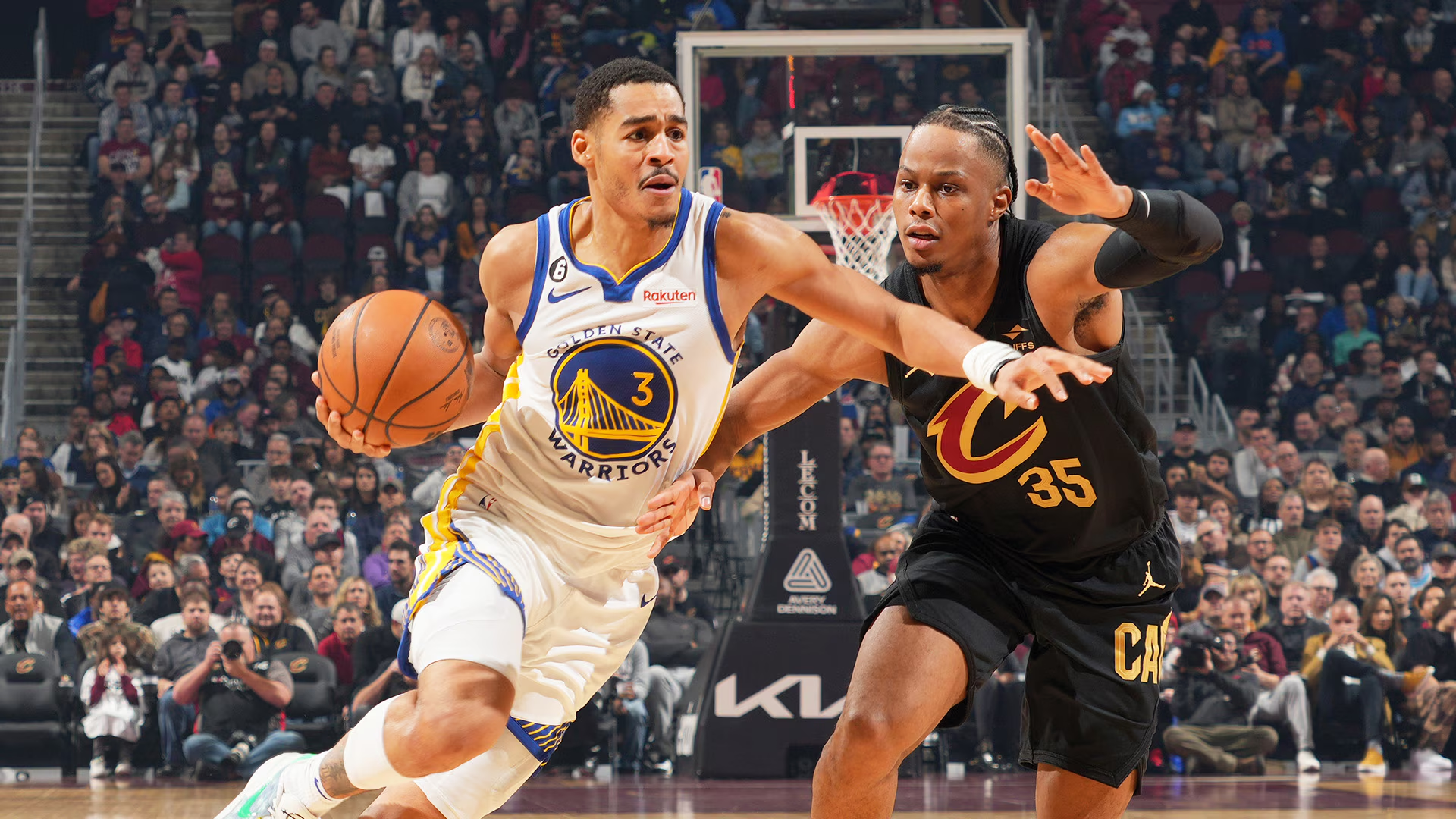
cleveland cavaliers vs golden state warriors match player stats
When the Cleveland Cavaliers and Golden State Warriors face off, fans know they’re in for a thrilling battle between two elite NBA franchises. These matchups are not just about the final score — they’re about the individual efforts, strategic plays, and statistical performances of star players and role contributors alike. In this article, we’ll dive deep into the player stats from a recent Cavaliers vs Warriors game, breaking down performances category by category to provide a detailed, expert-level analysis of how each key player impacted the contest.
Throughout this piece, we’ll cover scorers, playmakers, defenders, bench contributions, efficiency metrics, and more. Whether you’re a die-hard NBA fan, a fantasy basketball player, or someone who loves basketball analytics, you’ll find something valuable in this comprehensive breakdown.
I. Scoring Leaders: Who Carried the Offense?
In any high-stakes matchup, the first place we look is scoring — who put the ball in the hoop consistently and effectively. In this game, both teams had standout scorers who shouldered major offensive responsibilities.
The Golden State Warriors, known for their heavy reliance on perimeter shooting, had multiple players reach double digits in scoring. Stephen Curry once again led the charge with his trademark blend of long-range shooting and aggressive drives to the basket. Curry’s scoring versatility was on full display as he hit several three-pointers, attacked the rim, and capitalized on free throw opportunities. His performance not only boosted Golden State’s point total but also opened up spacing for teammates.
For the Cavaliers, Donovan Mitchell was the primary scoring threat. Mitchell attacked the defense relentlessly, utilizing his quick first step and pull-up jumpers to find points in tough spots. He also excelled in mid-range opportunities and capitalized on transition chances. Even when defenses collapsed on him, Mitchell made smart decisions, finding open teammates on kick-outs or stepping up for contested mid-range jumpers.
Besides Curry and Mitchell, Klay Thompson and Darius Garland also provided crucial buckets for their respective teams. Thompson bounced back with timely threes, while Garland’s ability to score off pick-and-rolls kept the Cavaliers’ offense fluid. These scoring efforts contributed to a closely contested offensive display throughout the game.
II. Playmaking and Assists: Creating Opportunities
Scoring is only one half of offensive success — creating scoring chances for others is just as important. In this matchup, several players stood out as primary playmakers, consistently setting up teammates for high-quality looks.
Stephen Curry’s assist numbers were impressive, showing that he wasn’t just scoring but also orchestrating the Warriors’ offensive sets. His vision in transition and ability to hit rolling bigs in the paint unlocked multiple scoring opportunities. Curry’s knack for delivering pinpoint passes — whether it was a bounce-pass to a cutting player or a quick kick to an open shooter — illustrated why he’s one of the top playmakers in the league.
For Cleveland, Darius Garland served as the key facilitator. Garland’s pick-and-roll reads were sharp, and he was adept at drawing defenders before dishing the ball to open shooters or cutters. His chemistry with forwards like Evan Mobley meant that Garland’s assists often led to easy points near the rim.
Another notable playmaker was Jordan Poole for Golden State, whose ability to attack the basket and dish out assists in tight quarters added another dimension to the Warriors’ offense. Poole’s drive-and-kick decisions helped keep Cleveland’s defense honest and opened up outside looks for shooters such as Klay Thompson.
Overall, the assist battle was competitive and highlighted how both teams valued ball movement and efficient shot generation rather than isolation scoring alone.
III. Rebounding and Interior Presence: Battling on the Boards

Rebounding is one of the most underrated aspects of a basketball game, often determining second-chance points and controlling the pace. In this Cavaliers vs Warriors matchup, rebounding was critical — especially given Cleveland’s strong frontcourt and Golden State’s emphasis on transition offense.
Evan Mobley dominated inside for Cleveland, showcasing his length and athleticism. Mobley’s ability to secure defensive boards prevented the Warriors from getting easy transition buckets, which is a staple of their offensive identity. On the offensive glass, Mobley’s crashing efforts led to multiple put-backs, adding vital extra possessions for the Cavaliers.
For Golden State, Draymond Green led the pack in rebounds, particularly on the defensive end. Green’s physicality and anticipation allowed him to clean up long rebounds created by perimeter shot attempts, especially from the Cavaliers. His rebounding wasn’t flashy — it was timely and positionally disciplined, helping to trigger fast break chances off defensive boards.
While both teams had strong rebounding figures, it was clear that Cleveland’s size advantage helped them seize more possession opportunities, particularly on the offensive glass. These extra chances were crucial in keeping the game tightly contested throughout all four quarters.
IV. Defensive Impact: Stops, Steals, and Blocks
Defense often doesn’t show up as prominently in the box score as scoring, but in a game with this level of competitive fire, it makes all the difference. This matchup featured gritty efforts from defenders on both ends of the court.
Cleveland’s perimeter defense was led by Caris LeVert and Isaac Okoro, who applied pressure on Golden State’s ball handlers. LeVert’s active hands resulted in several deflections, disrupting passing lanes and slowing down the Warriors’ ball movement. Okoro’s tenacity on defense made it difficult for shooters to get clean looks off the catch.
Golden State’s Draymond Green, known for his defensive IQ, anchored the Warriors with his ability to switch seamlessly across multiple positions. Green’s communication on defense was evident as he directed on-court traffic, encouraging switches and closing out shooters. His block on a key possession prevented a likely Cleveland score and energized the Warriors on the defensive end.
In terms of steals, both teams logged several, often leading directly to transition points. Cleveland excelled in forcing turnovers when the Warriors attempted to reset their offense, whereas Golden State’s quick rotations cut off passing lanes and created jump ball opportunities.
Overall, defense was tight, disciplined, and full of hustle plays that didn’t always show up in the most obvious statistics but significantly affected the flow and momentum of the game.
V. Three-Point Shooting: Where the Game Often Turns
In today’s NBA, three-point shooting can swing games dramatically in a matter of minutes. This matchup was no exception — both teams relied on perimeter shooting to stretch defenses and generate scoring bursts.
Stephen Curry, unsurprisingly, led all shooters from beyond the arc. His ability to score from deep at high efficiency forced Cleveland to stretch its defensive coverage, opening up opportunities for drives and post touches. Curry’s movement off screens was crisp, helping him get open looks while keeping defenders on their toes.
Cleveland’s Darius Garland and Donovan Mitchell also contributed with timely three-point shots. Garland’s quick release from long range prevented Warriors’ defenders from double-teaming in the paint, while Mitchell’s confident shooting gave Cleveland momentum at crucial moments. Their three-point contributions balanced Cleveland’s offensive attack and kept Golden State’s defense from collapsing too early.
The Warriors also received help from shooters like Klay Thompson, who spaced the floor with timely threes that silenced the crowd and shifted momentum. Thompson’s off-ball movement and catch-and-shoot precision added another layer of offensive complexity that Cleveland had to account for.
Three-point shooting was a defining factor in the rhythm of this game — it dictated spacing, defensive rotations, and ultimately, which team could grab runs at pivotal junctures.
VI. Free Throws: Capitalizing on Opportunities
Free throw percentage and attempts can often be the silent difference between winning and losing. In tight games, teams that get to the line consistently and convert well have a distinct advantage.
The Cavaliers did well in drawing fouls, particularly through aggressive drives to the basket. Donovan Mitchell excelled here, using screens and change-of-pace moves to force contact and get to the line. Mitchell’s free throw success kept Cleveland’s scoring stream steady — especially in clutch moments where every possession mattered.
Golden State, led by Stephen Curry, also took advantage of free throws. Curry’s ability to finish around the rim against larger defenders often resulted in shooting fouls, which he converted at a high clip. These trips to the line helped negate some of Cleveland’s defensive adjustments.
One subtle but important factor was how often role players converted from the charity stripe. For instance, Cleveland’s Max Strus knocked down multiple freebies, contributing points that might not have come from field goals in the same situations. Similarly, Golden State’s Jordan Poole made his free throws count, helping the Warriors stay in striking distance even when their shots weren’t falling as frequently.
Overall, free throw performance was solid on both sides and contributed meaningfully to a closely contested battle.
VII. Bench Contributions: The Unsung Heroes
In modern basketball, depth can be just as important as star power. Bench players often provide energy boosts, defensive stops, and scoring relief when starters need rest.
Cleveland’s bench was anchored by contributors like Caris LeVert and Kevin Love — veterans who brought experience and floor spacing. LeVert’s ability to score in isolation and attack closeouts created second-unit scoring runs. Love, with his reliable threepoint shooting, kept defenses honest and forced the Warriors to guard the perimeter even when starters were out.
Golden State’s bench featured impactful minutes from Andre Iguodala and Jonathan Kuminga. Iguodala’s veteran savvy showed in his smart shot selection and timely passes, while Kuminga’s athleticism energized the Warriors with hustle plays and rim pressure on defense.
Other bench players showed flashes that could swing future matchups — crucial hustle rebounds, defensive rotations, and early offense in transition. These contributions may not always pop in the box score, but coaches and advanced metrics understand how valuable they truly are.
VIII. Turnovers: Managing Possession
Turnovers can abruptly end promising possessions and gift points to the opposing team. In this matchup, turnover management played a pivotal role in the overall flow.
The Cavaliers were aggressive in pushing the pace, which sometimes led to unforced errors. While Donovan Mitchell and Darius Garland were effective playmakers, there were moments where miscommunication caused costly giveaways. These turnovers often led to fast break points for the Warriors, proving how critical ball security is against an elite transition squad.
The Warriors, on the other hand, generally handled the ball well — thanks in large part to Stephen Curry’s calm demeanor and Draymond Green’s court vision. However, Golden State did have a few uncharacteristic turnovers when pressured off screens by Cleveland’s defense. These turnovers energized the Cavaliers and led to easy points in the paint.
Ultimately, both teams showed solid but imperfect turnover control. The battle in this category highlighted how mastery of possession — especially late in games — often correlates with winning outcomes.
IX. Plus-Minus and Advanced Metrics
Beyond basic box score stats, advanced analytics like plus-minus, player efficiency rating (PER), usage rate, and true shooting percentage help tell a more nuanced story. These metrics reveal how players influenced the game beyond visible numbers.
On the Warriors’ side, Stephen Curry’s plus-minus was among the highest, indicating that Golden State performed better on the court when he was actively facilitating offense and defense. Curry’s true shooting percentage was also impressive, reflecting his efficient scoring from the field, three-point range, and free throws.
For Cleveland, Evan Mobley’s defensive rating was noteworthy. His ability to alter shots, protect the rim, and anchor the defense contributed to a lower opponent scoring efficiency when he was on the court. Donovan Mitchell’s usage rate was high, consistent with his role as the primary offensive initiator — and his efficiency proved that this usage translated into effective scoring and playmaking.
Advanced metrics also highlighted bench impact — players like Caris LeVert and Jordan Poole posted positive plus-minus numbers, showing that they contributed favorably when they entered the lineup. These analytics are valuable for understanding performance beyond points, rebounds, and assists.
X. Crunch Time Performances
The final minutes of a close game often define legacy and momentum for both teams. In this matchup, clutch performances were critical.
Stephen Curry once again proved that he’s one of the most feared clutch performers in the league. With the game hanging in the balance, Curry stayed aggressive, launched decisive threes, and calmly navigated screens to create high-value scoring opportunities. His clutch scoring and ability to draw defenses before making the right pass shifted momentum late in the contest.
Donovan Mitchell also rose to the occasion for Cleveland. Mitchell’s fearless drives and mid-range scoring pressure forced the Warriors to make rotation decisions that sometimes opened up opportunities for his teammates. Mitchell’s hustle on defense late in the game (contesting shots, fighting for rebounds) showed his commitment to both ends when it mattered most.
Besides the superstars, role players such as Klay Thompson and Darius Garland made key plays in crunch time — knocking down important shots, securing defensive rebounds, or slowing down transition opportunities. These moments, while less flashy, underscore how team basketball and clutch execution intertwine.
XI. Overall Team Performance Through Player Stats
When we compile the stats and narratives, we observe a narrative of balance, resilience, and star power. Cleveland’s offense blended aggressive drives, efficient shooting, and smart passing. Their defense contested shots and battled for rebounds, disrupting Golden State’s rhythm.
Meanwhile, the Warriors demonstrated their trademark offensive flexibility, ball movement, and deep shooting range. Golden State’s defensive efforts forced tough shots and created transition opportunities that resulted in high-value buckets.
Individually, Curry and Mitchell led their teams with scoring and playmaking, but the contributions of Mobley, Garland, Thompson, and other role players made this matchup a true showcase of NBA talent and competitive spirit.
This deep dive into player stats isn’t just about numbers — it’s about understanding how each player contributed within the flow of the game, how coaching adjustments manifested on the court, and how basketball fundamentals combined with star talent produced an unforgettable performance.
XII. Final Thoughts: Why Stats Matter
Basketball statistics are more than numbers on a sheet — they reflect effort, execution, strategy, and context. By examining player stats in depth, we get insights into decision-making, team dynamics, and individual growth. The Cavaliers vs Warriors matchup exemplified how elite talent and team cohesion translate into a compelling game narrative.
Whether you’re analyzing these stats for fantasy basketball, team evaluations, or simply out of passion for the sport, each data point tells a part of a bigger story. The interplay between scoring, defense, efficiency, and situational performance reveals that basketball is both an art and a science — a beautiful fusion of skill, strategy, and heart.
Thanks for reading this expert breakdown of the Cleveland Cavaliers vs Golden State Warriors match player stats. If you want more analysis, deep dives, or breakdowns of other games, just let me know
You may also read
golden state warriors vs brooklyn nets match player stats
knicks vs toronto raptors match player stats
About the Author