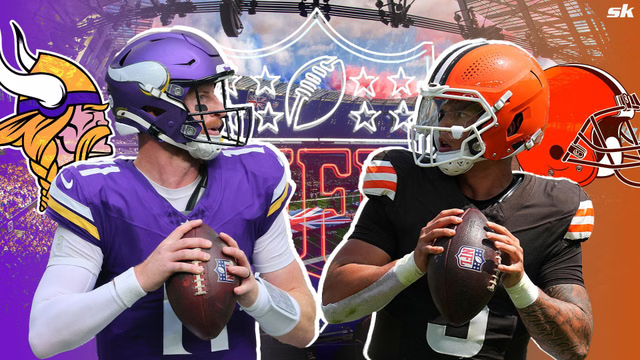
minnesota vikings vs cleveland browns match player stats
When football fans talk about matchups that feel gritty, physical, and deeply strategic, Minnesota Vikings vs Cleveland Browns is one that quietly delivers every time. This isn’t just a clash of teams—it’s a collision of philosophies, player development systems, and contrasting styles of football. Looking at Minnesota Vikings vs Cleveland Browns match player stats gives us a deeper appreciation of how individual performances shape the final outcome far beyond the scoreboard.
In this long-form expert-style breakdown, we’ll explore the matchup from every possible angle. From quarterback efficiency and wide receiver chemistry to defensive dominance and special teams impact, this article dives deep into player stats, tendencies, and performance narratives. The tone is casual and easy to read, but the analysis is detailed enough to satisfy even hardcore NFL fans.
Overview of the Minnesota Vikings vs Cleveland Browns Matchup
The Minnesota Vikings and Cleveland Browns are teams built on identity. Minnesota often leans on structured offense, disciplined route running, and calculated defensive schemes. Cleveland, on the other hand, thrives on physicality, aggressive defense, and imposing line play. When these teams meet, the game becomes a chess match rather than a shootout.
From a statistical perspective, Minnesota Vikings vs Cleveland Browns match player stats reveal how evenly matched these teams can be. Even when one side controls possession or yardage, the other often compensates with red-zone efficiency or defensive turnovers. This balance makes individual player stats more important than ever, as one standout performance can tilt the entire game.
Another key aspect of this matchup is adaptability. Both teams have shown an ability to adjust mid-game, which means early stats don’t always predict the final result. A quarterback struggling in the first half might finish strong, or a defense dominating early might wear down late. These trends become clear only when player stats are analyzed holistically.
Quarterback Performance Analysis
Quarterbacks always sit at the center of attention, and this matchup is no different. The Vikings’ quarterback typically emphasizes timing, accuracy, and decision-making, while the Browns’ quarterback often plays with a mix of aggression and improvisation.
When reviewing Minnesota Vikings vs Cleveland Browns match player stats, the quarterback numbers tell a story of contrasting approaches. Minnesota’s signal-caller usually posts high completion percentages, reflecting a short-to-intermediate passing strategy. These stats often show fewer risky throws, but also fewer explosive plays unless the situation demands it.
Cleveland’s quarterback stats, by comparison, tend to show more variance. There are moments of brilliance—deep completions, extended plays, and big third-down conversions—but also periods of inconsistency. This volatility is reflected in yards per attempt and pressure-related metrics, which often spike when the Browns’ offensive line controls the game.
What makes this matchup fascinating is how each quarterback handles defensive pressure. Minnesota quarterbacks often rely on pre-snap reads and quick releases, minimizing sacks. Browns quarterbacks, however, sometimes hold the ball longer, leading to higher sack totals but also more downfield success. These tendencies shape the flow of the game in subtle but meaningful ways.
Running Back Contributions and Rushing Stats
Running backs play a critical role whenever the Vikings and Browns face off. Both teams value the ground game, though they use it differently. Minnesota tends to use the run to set up play-action, while Cleveland often uses it as the foundation of the offense.
In Minnesota Vikings vs Cleveland Browns match player stats, rushing attempts and yards reveal a clear contrast. Cleveland running backs usually post higher carry totals, reflecting their commitment to controlling the clock and wearing down defenses. Their stats often include consistent gains rather than explosive runs, emphasizing efficiency over flash.
Minnesota’s running backs, on the other hand, often show fewer carries but higher yards per attempt. This suggests a more opportunistic rushing strategy, where the run is used to exploit defensive gaps rather than dominate possession. These stats become especially important in red-zone situations, where Minnesota often relies on smart rushing designs.
Another important aspect is pass-catching ability. Vikings running backs frequently contribute in the receiving game, boosting their all-purpose yard totals. Browns running backs, while capable receivers, are more often used as blockers or decoys. These differences are clearly reflected in target and reception stats and help explain each team’s offensive rhythm.
Wide Receiver Performance and Receiving Stats
Wide receivers often steal the spotlight in this matchup, especially when defenses focus heavily on stopping the run. Minnesota’s receiving corps is usually built around precise route runners who excel at creating separation. Cleveland’s receivers, meanwhile, often rely on physicality and contested catches.
Looking at Minnesota Vikings vs Cleveland Browns match player stats, Minnesota receivers typically show high catch rates and steady yardage accumulation. These stats indicate trust between quarterback and receiver, particularly on third downs. Slot receivers often play a crucial role, moving the chains and keeping drives alive.
Cleveland’s receiver stats, by contrast, often highlight big-play potential. Average depth of target is usually higher, and yards per reception tend to spike when the Browns find success. However, these stats also reflect inconsistency, with stretches of limited production followed by explosive moments.
What’s particularly interesting is how defensive matchups affect these stats. When Minnesota’s top receiver draws double coverage, secondary receivers often step up statistically. For Cleveland, when defenses focus on their primary deep threat, tight ends and running backs tend to see increased targets. This adaptability shows up clearly in the box score.
Tight End Impact and Red-Zone Efficiency
Tight ends are often the unsung heroes of this matchup. Both teams use tight ends as blockers, safety valves, and red-zone weapons. Their statistical impact may not always dominate headlines, but it’s critical to overall success.
In Minnesota Vikings vs Cleveland Browns match player stats, tight end receptions often spike in high-pressure situations. Minnesota tight ends frequently serve as reliable options on short-yardage plays, reflected in high catch percentages and modest yard totals. These stats show consistency rather than explosiveness.
Cleveland tight ends, on the other hand, often post higher yards per catch. This suggests more vertical usage, especially off play-action. Their stats frequently include red-zone touchdowns, highlighting their importance near the goal line.
Another notable trend is blocking efficiency. While this doesn’t always show up directly in traditional stats, advanced metrics reveal how tight ends contribute to successful rushing plays. In this matchup, Cleveland tight ends often grade highly as run blockers, while Minnesota’s shine more as pass-catchers.
Offensive Line Performance and Protection Stats
Games between the Vikings and Browns are often decided in the trenches. Offensive line performance has a direct impact on quarterback stats, rushing efficiency, and overall offensive rhythm.
When analyzing Minnesota Vikings vs Cleveland Browns match player stats, sack totals and pressure rates offer valuable insight. Minnesota’s offensive line usually allows fewer sacks, reflecting a scheme that prioritizes quick passes and solid interior protection. These stats often correlate with consistent quarterback performance.
Cleveland’s offensive line stats tend to show dominance in run blocking. Rushing yards before contact are often higher, indicating that linemen are creating space at the line of scrimmage. However, pass protection stats can vary, especially against aggressive defensive fronts.
Penalties are another important factor. False starts and holding calls can derail drives, and these show up clearly in player stats. In this matchup, discipline often becomes a deciding factor, with the more disciplined line gaining a subtle but meaningful advantage.
Defensive Line Dominance and Pressure Metrics
Defense plays a massive role whenever these two teams meet. Both franchises pride themselves on physical defensive lines capable of disrupting any offense.
In Minnesota Vikings vs Cleveland Browns match player stats, defensive linemen often post impressive pressure numbers. Minnesota defenders tend to excel in disciplined gap control, resulting in steady tackle totals and run stops. These stats may not always include flashy sack numbers, but they reflect consistent impact.
Cleveland’s defensive line stats often stand out in terms of sacks and quarterback hits. Aggressive pass rushing leads to momentum-shifting plays, which are clearly visible in sack and forced fumble statistics. This pressure can drastically alter the opposing quarterback’s efficiency.
Another key metric is snap count. Defensive linemen who play a high percentage of snaps often show fatigue late in games, which can be reflected in fourth-quarter rushing stats. This dynamic is especially important in tightly contested matchups like this one.
Linebacker Performance and Tackling Efficiency
Linebackers act as the bridge between the defensive line and secondary, and their stats often reveal how well a defense functions as a unit.
In Minnesota Vikings vs Cleveland Browns match player stats, linebacker tackle numbers are usually high, reflecting frequent involvement in both run defense and pass coverage. Minnesota linebackers often show balanced stat lines, with tackles, pass breakups, and occasional blitz sacks.
Cleveland linebackers, by contrast, often post higher tackle-for-loss numbers. This indicates aggressive play styles and a willingness to attack the line of scrimmage. These stats can swing momentum by forcing offenses into long-yardage situations.
Coverage stats also matter. Linebackers who excel in coverage limit tight end and running back production. In this matchup, the team whose linebackers perform better in coverage often gains a significant advantage in third-down efficiency.
Secondary Play and Coverage Statistics
The secondary plays a crucial role in determining the pace and outcome of the game. Both teams rely on disciplined coverage schemes, though their approaches differ.
In Minnesota Vikings vs Cleveland Browns match player stats, Minnesota defensive backs often show high pass deflection totals. This suggests tight coverage and strong anticipation, even if interception numbers remain modest.
Cleveland’s secondary stats often include more interceptions, reflecting a risk-reward approach. Aggressive coverage can lead to big plays, both for and against them. These stats highlight the volatility of Cleveland’s defensive strategy.
Another important factor is missed tackles. Secondary players are often the last line of defense, and missed tackles can turn short gains into long touchdowns. These metrics, though less glamorous, are vital to understanding overall defensive performance.
Special Teams Performance and Hidden Yardage
Special teams rarely get the attention they deserve, but they can significantly influence field position and momentum.
When reviewing Minnesota Vikings vs Cleveland Browns match player stats, kickoff return averages and punt coverage stats reveal subtle advantages. Minnesota often emphasizes safe returns and solid coverage, minimizing risk.
Cleveland’s special teams stats sometimes show more aggressive returns, leading to better average starting field position. However, this approach also carries risk, reflected in occasional penalties or turnovers.
Kicking accuracy is another critical factor. Field goal and extra point stats often decide close games, and consistency under pressure becomes especially important in high-stakes matchups like this one.
Turnovers and Game-Changing Plays
Turnovers often define the outcome of Vikings vs Browns games. Interceptions, fumbles, and forced turnovers can swing momentum instantly.
In Minnesota Vikings vs Cleveland Browns match player stats, turnover differentials frequently correlate with victory. Minnesota often emphasizes ball security, resulting in fewer giveaways. Cleveland, while aggressive, sometimes pays the price for risk-taking.
Forced turnover stats also matter. Defensive players who consistently create turnovers often change the narrative of the game. These stats highlight impact beyond traditional tackles or yards.
What makes turnovers especially interesting in this matchup is timing. A turnover late in the game can overshadow an entire afternoon of solid play, making these stats some of the most emotionally charged for fans.
Coaching Influence on Player Stats
Coaching decisions have a profound impact on player statistics. Play-calling, personnel usage, and in-game adjustments all shape how individual stats accumulate.
In Minnesota Vikings vs Cleveland Browns match player stats, you can often see coaching philosophy reflected clearly. Minnesota’s structured approach leads to evenly distributed stats, while Cleveland’s aggressive style produces more statistical extremes.
Timeout usage, challenge decisions, and fourth-down choices all indirectly affect stats by extending or ending drives. These moments may not appear directly in box scores, but their influence is undeniable.
Over time, trends emerge that reveal how coaching staffs maximize their players’ strengths. This long-term perspective adds depth to any statistical analysis of this matchup.
Player Matchups That Define the Game
Certain individual matchups often define Vikings vs Browns games. Whether it’s a top receiver against an elite corner or a dominant pass rusher versus a struggling tackle, these battles show up clearly in player stats.
In Minnesota Vikings vs Cleveland Browns match player stats, spikes or drops in production often align with these head-to-head battles. When one player gains the upper hand, the ripple effect can be felt across the entire game.
These matchups also influence game plans. Coaches may adjust play-calling to exploit or neutralize specific players, which in turn shapes the statistical landscape.
Understanding these micro-battles adds another layer of appreciation for the game and helps explain why certain players’ stats stand out.
Momentum Shifts and In-Game Trends
Football games are dynamic, and momentum can shift quickly. Player stats often capture these changes in subtle ways.
In Minnesota Vikings vs Cleveland Browns match player stats, you might notice a surge in rushing attempts late in the game, signaling a team trying to protect a lead. Alternatively, passing stats may spike as a team plays from behind.
Defensive stats also reflect momentum. Increased sacks or pass deflections often coincide with crowd energy and confidence. These trends help tell the story beyond the final score.
Recognizing these patterns allows fans to understand not just what happened, but why it happened.
Comparing Star Players’ Performances
Star players naturally draw attention, and their stats often dominate discussions after the game.
In Minnesota Vikings vs Cleveland Browns match player stats, comparing star performances reveals interesting contrasts. Minnesota stars often show consistent production, while Cleveland stars may show higher peaks and lower valleys.
These differences highlight each team’s reliance on star power versus collective effort. Both approaches can succeed, depending on execution and game context.
Over multiple matchups, these comparisons become even more meaningful, revealing long-term trends in player development and usage.
Depth Players and Their Statistical Impact
Depth players often make the difference in close games. Injuries, fatigue, and situational substitutions bring these players into the spotlight.
In Minnesota Vikings vs Cleveland Browns match player stats, depth players’ contributions often show up in unexpected places. A backup receiver might post key catches, or a rotational defender might record a crucial sack.
These stats highlight roster construction and coaching trust. Teams with reliable depth tend to perform better late in games and over the course of a season.
Recognizing these contributions adds nuance to any analysis of the matchup.
Advanced Metrics and Analytical Insights
Beyond traditional stats, advanced metrics provide deeper insight into player performance.
In Minnesota Vikings vs Cleveland Browns match player stats, metrics like yards after contact, pressure rate, and expected points added help explain efficiency and impact. These numbers often validate what fans see on the field.
Advanced analytics also reveal hidden strengths and weaknesses. A player with modest yardage might still grade highly due to efficiency or situational impact.
These insights elevate the analysis from surface-level observation to expert understanding.
Fan Reactions and Narrative Influence
Player stats don’t exist in a vacuum. Fan reactions and media narratives often shape how stats are perceived.
In Minnesota Vikings vs Cleveland Browns match player stats, certain performances become iconic, even if the raw numbers aren’t extraordinary. Context and emotion amplify their significance.
Understanding this narrative layer helps explain why some stats resonate more than others. Football is as much about storytelling as it is about numbers.
Long-Term Implications of Player Stats
Individual game stats can influence season trajectories, contract decisions, and player reputations.
In Minnesota Vikings vs Cleveland Browns match player stats, standout performances often become reference points later in the season. Coaches and analysts revisit these games when evaluating progress.
Over time, these stats contribute to a larger picture of team identity and player legacy.
Final Thoughts on Minnesota Vikings vs Cleveland Browns Match Player Stats
The Minnesota Vikings vs Cleveland Browns match player stats tell a story far richer than a simple win or loss. They reveal philosophies, strategies, strengths, and vulnerabilities that define each team.
By analyzing quarterback efficiency, rushing balance, receiving depth, defensive impact, and special teams performance, we gain a complete understanding of how this matchup unfolds. Every stat contributes to the narrative, from headline-grabbing touchdowns to quiet but crucial tackles.
For fans who want more than just highlights, diving into these player stats offers a deeper appreciation of the game. It shows how football is truly a team sport, shaped by countless individual efforts working together toward a common goal.
Whether you’re a Vikings fan, a Browns supporter, or simply an NFL enthusiast, this matchup remains a fascinating case study in how player stats bring the game to life.
You may also read
washington commanders vs detroit lions match player stats
About the Author