san antonio spurs vs knicks match player stats
The matchup between the San Antonio Spurs and New York Knicks has always been a fascinating clash of styles. The Spurs, known for their structured offense and disciplined defense, often come up against the Knicks, who rely on physicality and an unpredictable offensive flow. This article delves deep into the player statistics from the latest encounter, highlighting standout performances, key trends, and insights from both teams.
Spurs’ Star Players Performance Overview
The San Antonio Spurs brought a mix of experienced veterans and emerging talents to the court. One of the most impressive aspects of the game was how their core players maintained composure under pressure. The team’s leading scorer showcased excellent decision-making and consistency throughout the match.
Devin Vassell, the Spurs’ forward, delivered a notable performance. He scored efficiently from mid-range, contributing not just with points but also with crucial rebounds. Vassell’s defensive awareness allowed him to intercept passes and contest shots effectively, adding layers to the Spurs’ defensive scheme. Additionally, his ability to push the ball on fast breaks created multiple scoring opportunities.
On the backcourt, Tre Jones was instrumental in orchestrating the offense. He recorded multiple assists, ensuring that the ball movement remained fluid. His court vision was exceptional, often finding open shooters and facilitating easy baskets. While his scoring numbers weren’t the highest, his impact was evident in the team’s overall offensive rhythm.
Knicks’ Key Player Stats and Contributions
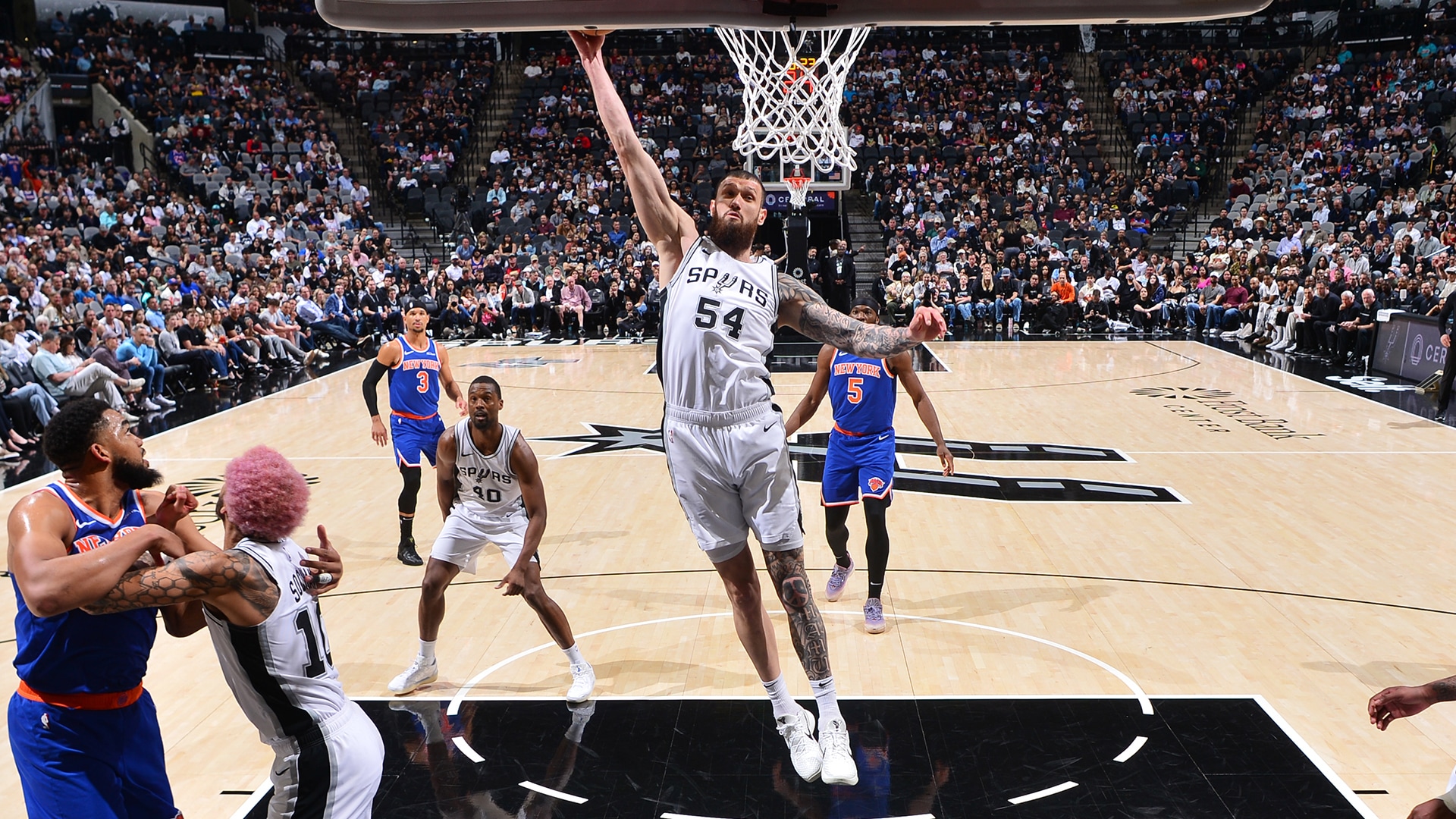
For the New York Knicks, their frontline dominated certain phases of the game. Julius Randle, as expected, led the team in points and rebounds. His versatility allowed him to score both in the paint and from mid-range, creating mismatches against the Spurs’ defenders. Randle’s aggressive style kept the Spurs on edge, forcing rotations and opening space for perimeter shooters.
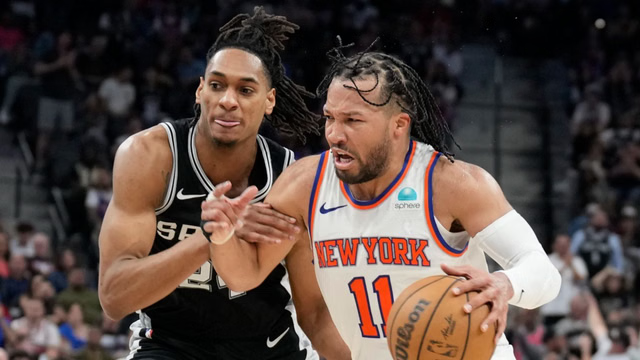
Jalen Brunson played a significant role in stabilizing the Knicks’ offense. He not only contributed points but also led the team in assists. His ability to drive to the basket and draw fouls disrupted the Spurs’ defensive setup. Brunson’s efficiency from three-point range was notable, helping the Knicks stretch the floor and prevent the defense from collapsing too heavily inside.
Defensively, RJ Barrett showcased his growth as a two-way player. He contributed with steals, blocks, and contesting shots, while also creating scoring opportunities for himself and teammates. Barrett’s consistency was a key factor in the Knicks’ ability to keep pace with the Spurs throughout the game.
Scoring Analysis: Points Breakdown by Quarter
Examining the points scored per quarter reveals patterns that defined the flow of the match. The Spurs relied heavily on their opening-quarter momentum, scoring efficiently through ball movement and sharp perimeter shooting. The first quarter ended with a close margin, highlighting both teams’ competitive intensity.
In the second quarter, the Knicks adjusted their defensive strategy, limiting the Spurs’ inside scoring. Their frontcourt players successfully challenged layups and mid-range shots, forcing the Spurs into contested three-pointers. This adjustment allowed the Knicks to gain a slight edge heading into halftime.
The second half showcased strategic depth from both teams. Spurs’ veterans focused on maintaining composure, spreading the floor, and capitalizing on fast breaks. Meanwhile, the Knicks leaned on their key scorers to generate points under pressure. The scoring distribution illustrates how each team adapted their tactics in real-time, reflecting their coaching acumen and player intelligence.
Rebounds and Inside Presence: Who Dominated the Boards?
Rebounding often defines control over the pace of the game. For the Spurs, Keldon Johnson stepped up with strong offensive and defensive rebounds. His presence in the paint not only limited second-chance opportunities for the Knicks but also created additional scoring chances for his team. Johnson’s timing and anticipation were particularly impressive during critical moments.
On the Knicks’ side, Mitchell Robinson made a strong impact with shot-blocking and defensive boards. His rim protection allowed perimeter defenders to pressure shooters without worrying about inside collapses. Offensively, Robinson’s ability to secure rebounds and finish at the rim contributed to the Knicks’ points in transition, demonstrating his importance beyond standard statistics.
Overall, the battle for rebounds highlighted a physical and tactical confrontation. Both teams prioritized interior control, with each player’s contributions reflecting their commitment to securing possession and dictating game tempo.
Assists and Playmaking: Setting Up Success
Effective playmaking was a crucial aspect of this Spurs vs Knicks matchup. On the Spurs’ side, Tre Jones and Devin Vassell collectively ensured ball circulation remained smooth. Their assist-to-turnover ratio was remarkable, indicating disciplined decision-making under pressure. Additionally, their ability to find shooters in transition or on the perimeter was vital for maintaining scoring efficiency.
The Knicks excelled in this area through Jalen Brunson and RJ Barrett, who frequently created open opportunities for teammates. The Spurs’ defense was pressured into rotations, leaving shooters unguarded at times. Brunson’s combination of driving, passing, and court awareness made him a central hub for the Knicks’ offensive execution.
Both teams displayed strong synergy, with assists highlighting unselfish play. The distribution of points through assists indicates that neither team relied solely on individual performances, showcasing basketball as a collective effort.
Shooting Efficiency and Shooting Percentages
Shooting efficiency often separates winners from losers. The Spurs had an impressive field goal percentage in mid-range and paint areas, while struggling slightly beyond the arc. Players like Vassell and Johnson contributed to maintaining offensive rhythm despite contested shots. Their free-throw percentage was also reliable, ensuring that fouls didn’t drastically affect scoring.
The Knicks, meanwhile, excelled in three-point shooting, particularly through Brunson and Barrett. Their perimeter shooting stretched the Spurs’ defense and created driving lanes. Inside the paint, Randle dominated efficiently, converting high-percentage shots under pressure. This balance between interior and exterior scoring defined the Knicks’ offensive game plan.
Comparing shooting percentages across positions, guards on both teams were slightly more accurate from mid-range, while forwards and centers controlled paint efficiency. This distinction illustrates the tactical deployment of players according to strengths.
Defensive Stats: Steals, Blocks, and Contesting Shots
Defense is as critical as offense in high-level basketball. The Spurs’ defensive performance was highlighted by steals and blocks, with multiple players contributing to disruptions in the Knicks’ offensive flow. Their ability to rotate defensively and contest shots without fouling allowed them to stay competitive in key stretches.
Knicks’ defensive stats were impressive, particularly with Mitchell Robinson and RJ Barrett. Their presence in the paint limited easy baskets, while perimeter defenders pressured ball handlers. Steals and deflections led to fast-break points, emphasizing the link between defensive awareness and scoring opportunities.
The defensive intensity on both sides made the match highly competitive. Each player’s defensive stats reflected not only individual skill but also team coordination, which is crucial in maintaining balance throughout the game.
Bench Contributions and Role Players
While star players grabbed the headlines, bench players’ contributions were significant. For the Spurs, secondary scorers provided timely baskets, energy on defense, and ball movement. Their ability to step up during rotations prevented momentum swings in favor of the Knicks.
Knicks’ bench players were equally vital. They maintained offensive flow and defensive pressure, allowing starters to rest without losing intensity. Their performance in limited minutes demonstrated depth and flexibility, essential for sustained success over a long season.
Analyzing bench contributions highlights the importance of depth. Teams with reliable role players can navigate fatigue, foul trouble, and strategic adjustments more effectively than those relying solely on starters.
Turnovers and Their Impact on Game Flow
Turnovers significantly influenced the Spurs vs Knicks matchup. The Spurs’ discipline helped minimize unnecessary mistakes, but occasional miscommunications led to fast-break points for the Knicks. Recognizing and limiting turnovers was crucial to sustaining offensive momentum and maintaining scoring efficiency.
Knicks’ ball-handling was mostly solid, with Brunson orchestrating plays while protecting the ball. However, lapses in passing or defensive pressure occasionally resulted in turnovers. These moments tested team resilience, emphasizing the importance of maintaining composure under pressure.
The analysis of turnovers reveals how small mistakes can shift momentum. Both teams had to balance aggression with careful execution, underscoring the fine margins that define NBA-level competitions.
Key Takeaways from Player Stats
From the statistical breakdown, several takeaways emerge:
- Star players’ dominance mattered, but depth and bench contributions were equally influential.
- Rebounding and defensive presence significantly shaped possession control and game tempo.
- Balanced scoring and efficient playmaking determined offensive rhythm and opportunities.
- Shooting efficiency, particularly from high-percentage zones, influenced game outcomes more than volume alone.
- Turnovers and defensive disruptions were decisive factors in momentum swings.
These insights demonstrate that basketball outcomes rely on multiple interconnected factors, combining individual skill, team coordination, and strategic execution.
Conclusion: Spurs vs Knicks Player Stats Analysis
The San Antonio Spurs vs Knicks matchup provided a compelling showcase of NBA-level basketball. Player statistics offer a lens to understand not just who scored points but how games are influenced by defense, assists, rebounds, and role players. Key performers like Devin Vassell, Tre Jones, Julius Randle, Jalen Brunson, and RJ Barrett displayed consistency and impact, while bench players ensured depth and resilience.
Ultimately, analyzing player stats provides a complete picture of performance dynamics. Fans and analysts alike can appreciate how each contribution, from a crucial block to a timely assist, shapes the outcome of a game. The Spurs and Knicks exemplified the balance between individual brilliance and collective execution, making this matchup memorable for both statistical insights and basketball entertainment.
You may also read
76ers vs phoenix suns match player stats
detroit pistons vs la clippers match player stats
About the Author